
Understanding Deep Learning AI: A Revolution in Artificial Intelligence
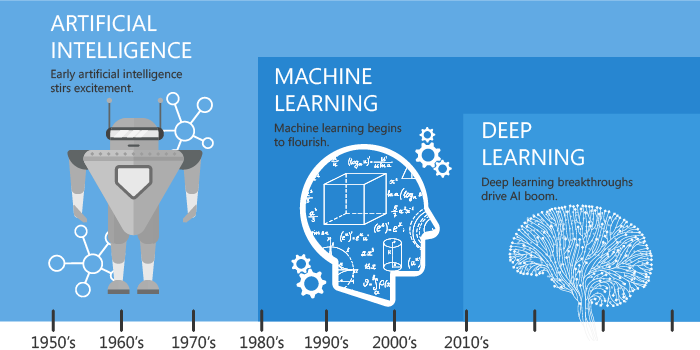
Deep learning, a subset of artificial intelligence (AI), has significantly transformed the landscape of technology and innovation. It mimics the workings of the human brain in processing data and creating patterns for decision-making. This article explores the fundamentals of deep learning AI, its applications, and its impact on various industries.
What is Deep Learning?
Deep learning is a type of machine learning that involves neural networks with three or more layers. These neural networks attempt to simulate the behavior of the human brain—albeit far from matching its ability—allowing it to “learn” from large amounts of data. While traditional machine learning algorithms are linear, deep learning models are stacked in a hierarchy of increasing complexity and abstraction.
How Does Deep Learning Work?
The core component of deep learning is the neural network, which consists of layers: an input layer, hidden layers, and an output layer. Each neuron in a layer receives input from neurons in the previous layer, processes it using weights and biases, applies an activation function, and passes it on to neurons in the next layer.
The process involves:
- Training: The model learns by adjusting weights based on error rates using a method called backpropagation.
- Validation: The model’s accuracy is tested against unseen data to ensure generalization.
- Inference: The trained model makes predictions or decisions based on new input data.
Applications of Deep Learning
The versatility of deep learning has led to its adoption across various sectors:
- Healthcare: Enhancing diagnostics through image analysis (e.g., detecting tumors in radiology scans).
- Automotive: Powering autonomous vehicles by enabling them to recognize objects like pedestrians and traffic signals.
- Finance: Improving fraud detection systems by analyzing transaction patterns.
- NLP (Natural Language Processing): Enabling more sophisticated language models for translation services and chatbots.
The Impact on Industries
The integration of deep learning into business processes has resulted in increased efficiency and innovation. In manufacturing, predictive maintenance powered by AI reduces downtime by anticipating equipment failures before they occur. In retail, personalized recommendations enhance customer experience and drive sales growth.
The Future of Deep Learning AI
The potential for deep learning continues to expand as computational power increases and more data becomes available. Future advancements may include even more refined natural language understanding, enhanced real-time decision-making capabilities for autonomous systems, and further breakthroughs in medical research.
Certainly, as deep learning technologies evolve, ethical considerations such as privacy concerns and algorithmic bias must also be addressed to ensure responsible use across all applications.
Conclusion
Deep learning AI stands at the forefront of technological advancement with its ability to process vast datasets with remarkable accuracy. As industries continue to harness this power for innovation, society can anticipate significant improvements in quality of life driven by intelligent systems capable of solving complex problems autonomously.
Top 5 Benefits of Deep Learning AI: Accuracy, Automation, and Beyond
Exploring the Challenges of Deep Learning AI: Data Dependency, Interpretability, and More
- 1. Data Dependency
- 2. Interpretability Issues
- 3. Computationally Intensive
- 4. Overfitting Risks
- 5. Ethical Concerns
1. Enhanced Accuracy
Deep learning AI models are renowned for their enhanced accuracy, particularly in complex tasks like image recognition and natural language processing. These models utilize layered neural networks that can learn intricate patterns and features from vast datasets, enabling them to make precise predictions and classifications. In image recognition, deep learning algorithms can identify objects and faces with remarkable precision, often surpassing human-level performance. Similarly, in natural language processing, these models excel at understanding and generating human language, improving the accuracy of translations, sentiment analysis, and conversational AI systems. As a result, deep learning AI has become an indispensable tool in various applications where high accuracy is critical.
2. Automation of Tasks
Deep learning AI excels in automating repetitive tasks, providing significant time and resource savings for businesses. By leveraging sophisticated algorithms, deep learning systems can efficiently handle tasks that typically require human intervention, such as data entry, customer service inquiries, and inventory management. This automation not only reduces the potential for human error but also allows employees to focus on more strategic activities that drive innovation and growth. As a result, businesses can enhance productivity and operational efficiency while reducing costs associated with manual labor. The ability of deep learning to streamline processes makes it an invaluable asset in today’s fast-paced business environment.
3. Scalability
One of the significant advantages of deep learning AI is its scalability, which allows these systems to efficiently manage large datasets and tackle complex problems with minimal human intervention. As data volume grows exponentially, traditional algorithms often struggle to maintain performance and accuracy. However, deep learning models excel in such environments due to their layered architecture, which can process vast amounts of data simultaneously. This capability enables businesses and researchers to analyze intricate patterns and extract valuable insights without the need for continuous manual adjustments or oversight. Consequently, deep learning’s scalability not only enhances productivity but also drives innovation across various fields by unlocking the potential of big data.
4. Adaptability
One of the significant advantages of deep learning AI is its adaptability, which allows these models to continuously improve and refine their performance over time. As they are exposed to new data, they can adjust their algorithms and enhance their understanding of various patterns and trends. This capability makes them highly versatile for evolving scenarios across different industries. For instance, in dynamic environments like finance or healthcare, where conditions and data inputs frequently change, deep learning models can swiftly adapt to new information, ensuring that predictions and decisions remain accurate and relevant. This ongoing learning process not only boosts efficiency but also ensures that the AI remains aligned with current needs and challenges.
5. Innovation Catalyst
Deep learning AI serves as a powerful innovation catalyst across various industries by facilitating the creation of advanced applications and solutions. Its ability to process and analyze vast amounts of data with high accuracy allows businesses to uncover insights that were previously unattainable. This capability drives the development of cutting-edge technologies, such as personalized medicine in healthcare, where treatments can be tailored to individual genetic profiles, or in finance, where risk assessment models become more precise. Furthermore, deep learning’s adaptability leads to breakthroughs in autonomous systems and smart infrastructure, fostering environments where efficiency and productivity are significantly enhanced. As a result, industries are not only able to solve complex problems but also push the boundaries of what is possible, leading to transformative changes that redefine market landscapes.
1. Data Dependency
One significant drawback of deep learning AI is its heavy reliance on large datasets for effective training. This data dependency poses a challenge for applications where only limited datasets are available, as the performance of deep learning models tends to improve with the quantity and diversity of data they are exposed to. Without sufficient data, these models may struggle to generalize well, leading to inaccurate predictions or decisions. This limitation can hinder the adoption of deep learning in fields where collecting vast amounts of high-quality data is impractical or impossible, thereby restricting its potential applications and benefits in those areas.
2. Interpretability Issues
One of the significant challenges associated with deep learning AI is interpretability. Due to the inherently complex architecture of deep learning models, which often involve numerous layers and interconnected neurons, understanding how these models arrive at specific decisions can be quite challenging. This lack of transparency poses a problem, especially in critical applications such as healthcare or finance, where understanding the rationale behind a decision is crucial. Without clear insights into the decision-making process, it becomes difficult for developers and users to trust and validate the outcomes generated by these models. Consequently, this opacity can lead to skepticism and hinder the broader adoption of deep learning technologies in areas where accountability and explainability are paramount.
3. Computationally Intensive
One of the significant drawbacks of deep learning AI is its computationally intensive nature, which poses a challenge for many organizations. Training deep learning models requires substantial computational resources, often involving high-performance hardware such as GPUs or TPUs to handle the massive amounts of data and complex calculations involved. This demand for advanced technology not only increases operational costs but also limits accessibility for smaller organizations or those without the necessary infrastructure. Consequently, companies may face significant financial barriers when implementing deep learning solutions, potentially hindering innovation and limiting the widespread adoption of these advanced AI technologies.
4. Overfitting Risks
One of the significant challenges associated with deep learning AI is the risk of overfitting. This occurs when a model learns the training data too well, capturing noise and details that do not generalize to new, unseen data. As a result, while the model may achieve high accuracy on the training dataset, its performance can dramatically drop when applied to real-world scenarios or test datasets. Overfitting undermines the reliability and robustness of deep learning models, making them less effective in practical applications where adaptability to new data is crucial. To mitigate this issue, techniques such as regularization, dropout layers, and cross-validation are often employed during model training to enhance generalization capabilities.
5. Ethical Concerns
The integration of deep learning AI into various sectors brings with it significant ethical concerns that need careful consideration. One major issue is the potential for bias in algorithms, as these systems often learn from historical data that may contain prejudices, leading to unfair or discriminatory outcomes. Additionally, the extensive data collection required for training deep learning models raises privacy concerns, as individuals’ personal information could be misused or inadequately protected. Furthermore, the increasing automation enabled by deep learning AI poses the risk of job displacement across multiple industries, potentially leading to economic and social challenges as workers may struggle to find new roles in an evolving job market. Addressing these ethical dilemmas is crucial to ensuring that the benefits of deep learning are realized responsibly and equitably.